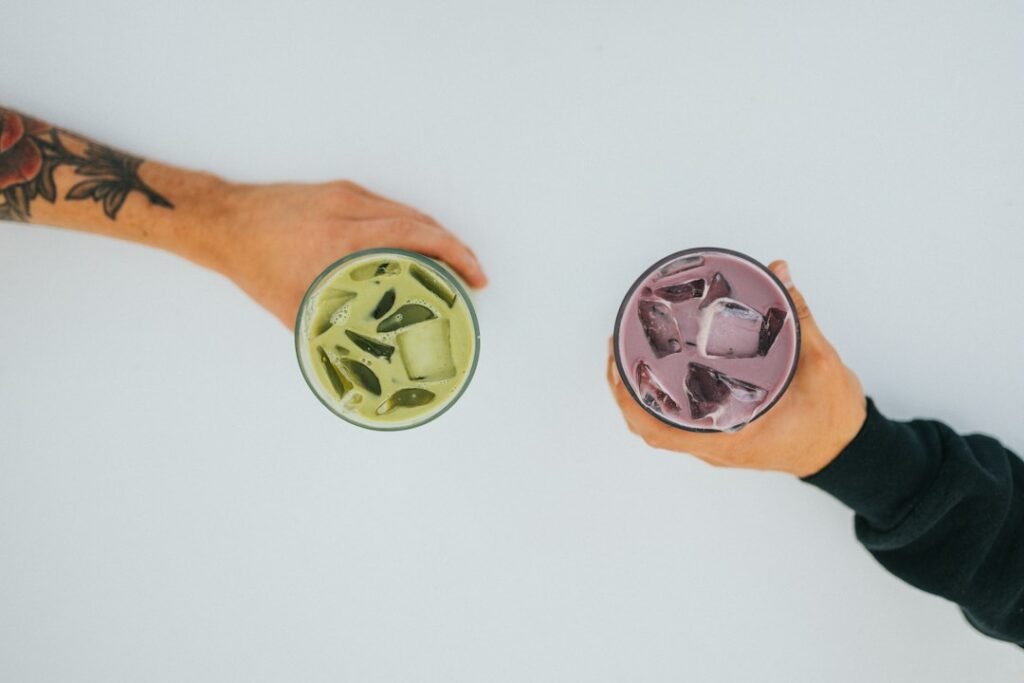
Double Cup drinks are a simple café-format idea: one takeaway cup is divided into two separate chambers, allowing a customer to order two different beverages or flavours together. The appeal is not that the cup itself guarantees profit; the opportunity is in combining novelty, sampling, menu engineering and social-media-friendly presentation with solid café unit economics.
This guide explains how an Indian café, kiosk, juice bar or cloud beverage brand can test the concept realistically in 2026, including sourcing, menu combinations, investment, pricing, break-even thinking, compliance and risks.
1. What exactly is the Double Cup concept?
A purpose-built split cup has two independent compartments inside one outer cup. Each side can hold a different cold beverage—for example matcha + coffee, strawberry + vanilla shake, mango + tender-coconut drink, or cold coffee + chocolate.
Viral posts have circulated about cafés in Denmark using the format for customers who do not want to choose between matcha and coffee. The social-media examples show the concept, but they do not provide audited revenue data, so claims that the cup itself increased revenue by a particular amount should be treated as marketing anecdotes rather than verified financial evidence.
2. Best way to start in India: test it inside an existing beverage business
The lowest-risk route is not to open a full café only for Double Cups. Instead, add it as a hero product inside an existing café, juice shop, milkshake outlet, food truck, bakery, college-area kiosk or cloud beverage brand.
- Start with 3–5 combinations only.
- Run a 100–300 cup pilot before ordering custom printed packaging in bulk.
- Track repeat orders, wastage, preparation time and social shares.
- Only scale the cup order after you know which combinations actually sell.
3. Sourcing the split cup
Search for terms such as “2-in-1 dual compartment split cup”, “double drink cup”, “two compartment beverage cup” and “split cup with dome lid”. Global packaging suppliers list food-grade PP/PET split cups designed for two beverages. Some custom manufacturers quote minimum orders of 10,000–20,000 pieces, while sourcing platforms also advertise lower-MOQ/import-on-demand options.
Do not place a large custom order first. Ask for samples and test: leak resistance, partition sealing, lid fit, straw placement, stacking, delivery damage, cup rigidity, food-contact documentation and compatibility with the actual beverages you plan to serve.
For a pilot, treat the cup cost as a supplier-quotation item rather than assuming an online price. Import freight, customs, printing and MOQ can change the landed cost significantly. A practical budgeting placeholder for a small pilot is ₹12–₹25 per cup/lid/straw set until you obtain a firm landed quotation. This is a planning assumption, not a verified market quote.
4. Menu combinations that make operational sense
| Combination | Why it works | Suggested positioning |
|---|---|---|
| Cold Coffee + Chocolate | Same base ingredients, easy prep | Safe bestseller |
| Matcha Latte + Cold Coffee | Strong visual contrast | Premium / social-media hero |
| Mango + Strawberry Shake | Familiar flavours | Family / youth market |
| Rose Milk + Badam Milk | Indian flavour familiarity | Local differentiation |
| Tender Coconut + Mango | Fresh, tropical positioning | Summer special |
| Chocolate + Vanilla Shake | Low menu complexity | Kids / dessert beverage |
For the first month, avoid combinations that require two completely different production systems. The concept works better financially when both sides share ingredients, equipment and preparation steps.
5. Realistic pilot investment
If you already operate a café or beverage counter, the Double Cup can be tested as an add-on product without buying a full new setup.
| Item | Indicative pilot budget |
|---|---|
| 100–300 split cups, samples, freight | ₹3,000–₹8,000 |
| Initial ingredients / flavour syrups / powders | ₹5,000–₹10,000 |
| Menu board, stickers, simple branding | ₹2,000–₹5,000 |
| Content / local launch promotion | ₹2,000–₹7,000 |
| Contingency and wastage buffer | ₹3,000–₹5,000 |
| Total add-on pilot | About ₹15,000–₹35,000 |
If you are starting a separate takeaway kiosk from zero, a realistic budget can move into roughly ₹1.5 lakh–₹4 lakh+ depending on deposit/rent, refrigeration, blender/coffee equipment, counter fabrication, signage, electrical work and local licences. Do not spend this amount until the product has been validated through a smaller pilot.
6. Unit economics: one example
Use the following only as a planning model. Replace every number with your own supplier quotations and recipe costs.
| Example Double Cup | Amount |
|---|---|
| Selling price | ₹169 |
| Ingredients for two mini portions | ₹45 |
| Split cup + lid + straws | ₹18 |
| Ice / water / napkin / small wastage allowance | ₹6 |
| Estimated variable cost | ₹69 |
| Gross contribution before rent, salary, electricity, tax, commissions and marketing | ₹100 |
At 30 orders per day for 26 operating days, this example would produce 780 orders, about ₹1.32 lakh in sales and about ₹78,000 gross contribution before fixed operating expenses. This is not net profit. Your actual result can be much lower if delivery commissions, rent, staffing, discounting or wastage are high.
Indian café industry references commonly place beverage gross margins much higher than final net margins; recent industry articles cite independent-café net margins around 5%–15%, with stronger operators sometimes reaching 15%–20%. That is why a ₹169 selling price should never be confused with ₹100 of take-home profit.
7. Pricing strategy
- Entry: ₹129–₹149 for simple juice / milk-based pairings.
- Core: ₹159–₹189 for coffee, shake and premium flavour combinations.
- Premium: ₹199–₹249 only when ingredients, portion size, location and presentation support it.
A good rule is to price from your measured recipe cost and target margin, not from what looks attractive on Instagram. Also remember that two half-portions still need to feel generous; if customers perceive the cup as “two tiny samples for a premium price”, repeat sales will suffer.
8. Where this concept can work best
- College and university zones
- Malls and cinema areas
- Tourist streets and beach locations
- Premium juice / milkshake shops
- Specialty coffee and matcha cafés
- Food courts, exhibitions and pop-up events
- Delivery-first beverage brands, after leak testing
9. Marketing plan: make the product demonstrate itself
The biggest marketing advantage is visual. Use contrasting colours in the two compartments, keep the cup transparent where possible, and build combinations that are obvious in a 2-second video.
- Launch with a “Choose any two” weekend offer.
- Create 3 signature combinations with memorable names.
- Offer a small discount for customers who post a Reel/Story and tag the store—subject to platform and advertising rules.
- Use a counter card showing the two flavours side by side.
- Track which pairing is photographed and reordered most often.
10. FSSAI and local compliance
Every food business operator in India must have the appropriate FSSAI registration/licence. From 1 April 2026, FSSAI revised the turnover categories: Registration is for turnover up to ₹1.5 crore, State Licence for above ₹1.5 crore and up to ₹50 crore, and Central Licence above ₹50 crore. The revised framework also introduced perpetual validity subject to compliance and applicable inspections. The current eligibility document lists petty tea/snack shops with turnover up to ₹1.5 crore under Registration, with a fee of ₹100.
Also check your municipal trade licence, Shops and Establishments requirements, GST position, signage rules, fire requirements and local food-service permissions as applicable to your format and state. If importing cups yourself, use a customs/GST professional and obtain proper food-contact documentation from the supplier.
11. Biggest risks to avoid
- Buying huge MOQ before testing: the viral product may not repeat-sell in your location.
- Leakage: one weak partition can create refunds and bad reviews.
- Slow preparation: two drinks can double barista time if recipes are not designed together.
- Overpricing: novelty can attract the first order but value drives the second.
- Too many combinations: inventory and wastage rise quickly.
- Calling gross margin “profit”: always subtract rent, salaries, electricity, commissions, marketing, taxes and wastage.
12. 7-day validation plan
- Get 3–5 cup samples from at least two suppliers.
- Leak-test with your actual drinks for 30–60 minutes.
- Cost six possible combinations accurately.
- Select only three for the first menu.
- Sell 20–30 test orders to existing customers.
- Record preparation time, complaints, repeat intent and most-posted pairing.
- Only then place a larger cup order and invest in custom branding.
Bottom line
The Double Cup is better treated as a product innovation inside a beverage business than as a guaranteed standalone “viral business”. It can raise average order value and attract attention if the combinations are visually strong and operationally simple, but the economics still depend on location, cup sourcing, recipe cost, customer traffic and repeat purchase.
Recommended starting point: validate it with a ₹15,000–₹35,000 add-on pilot, three combinations and 100–300 cups before committing to a standalone kiosk or large imported MOQ.
Sources & verification
- FSSAI — Revised turnover thresholds, effective 1 April 2026
- FoSCoS — 2026 Kind of Business eligibility and fee table
- Restaurant India — realistic café margin discussion
- Maibao — example dual-compartment beverage cup specification
- Golaa — example 2-in-1 split cup sourcing format
Disclaimer: Investment, selling-price and unit-economics figures in this guide are illustrative planning estimates, not guaranteed results. Obtain current supplier quotations and local professional advice before investing.