Can an agricultural spraying drone become a viable service business in India? It can—but buying a drone is only one part of the business. The real test is whether you can build repeat demand across enough acres, operate safely and legally, control travel and battery costs, and collect payments on time. This free guide explains the business model, investment assumptions, pricing, break-even maths, government support and the checks to complete before spending money.
Research note: This guide was reviewed on 11 November 2026. Government figures are linked to their original sources. Financial projections are illustrative planning scenarios—not supplier quotations, market averages or guaranteed earnings.
1. What Is an Agricultural Drone Spraying Business?
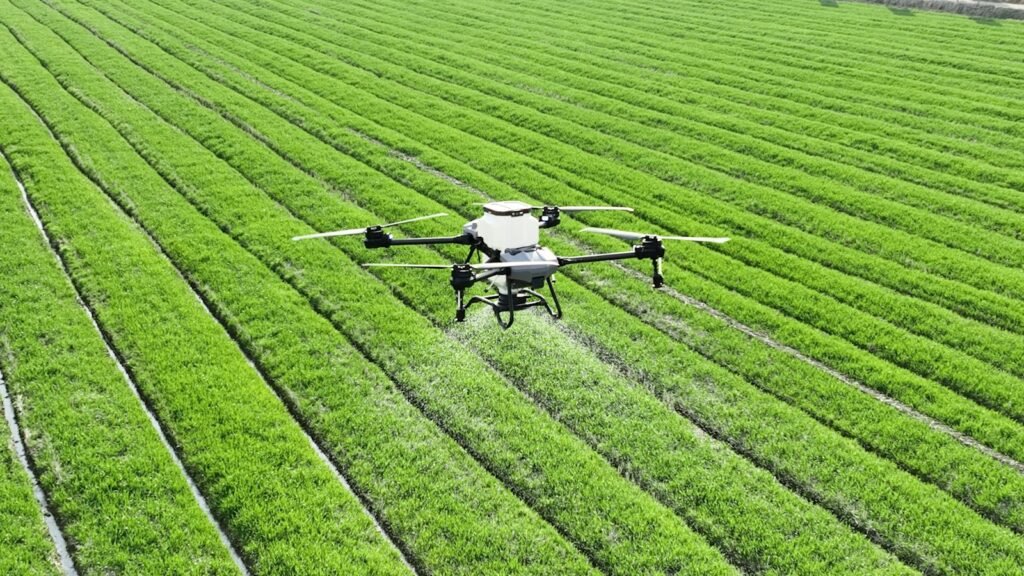
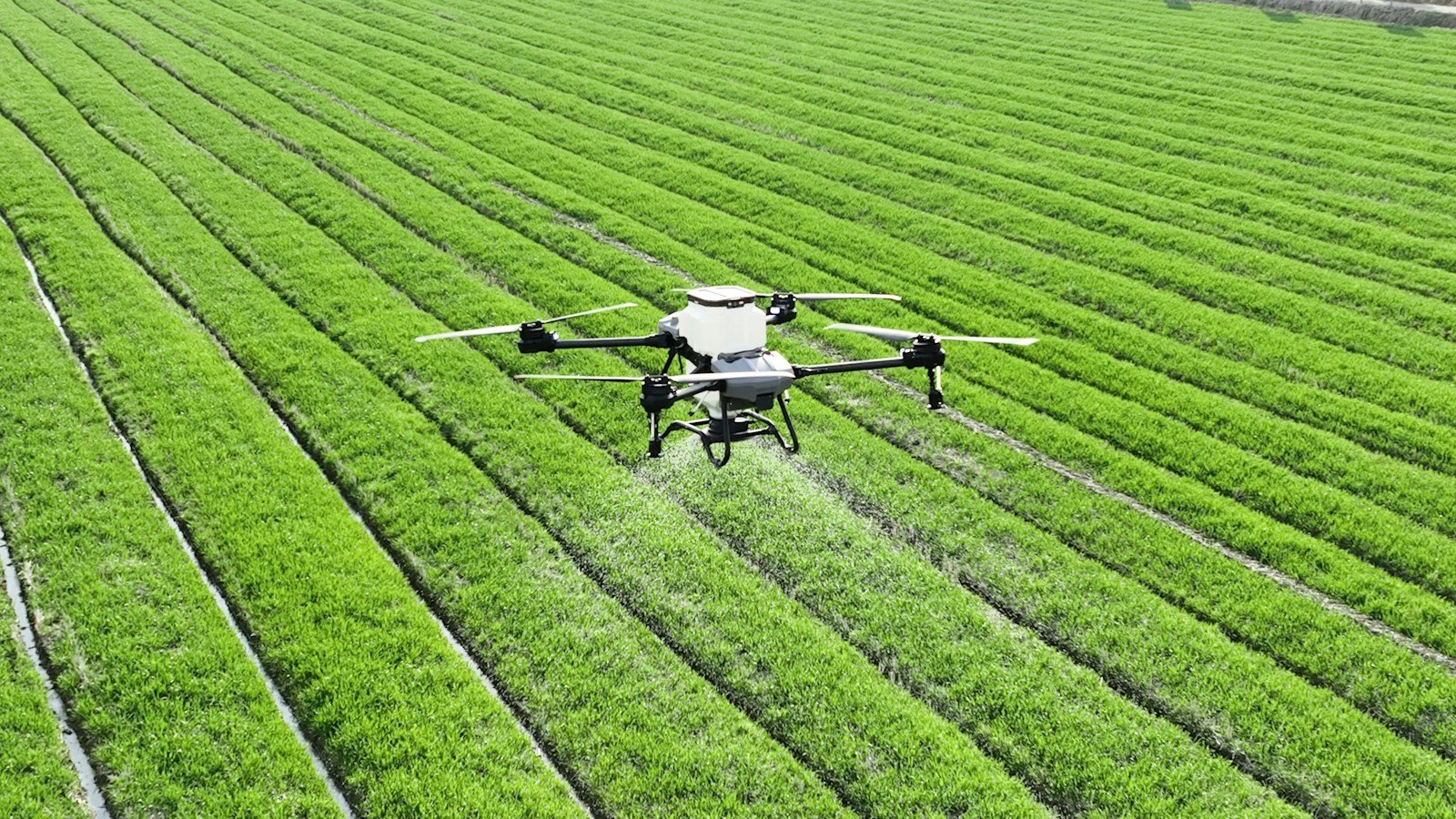
An agricultural drone spraying business is a fee-based field service. Instead of selling a drone to every farmer, an operator owns or manages a compliant agricultural spraying drone and charges farmers, FPOs, cooperatives or other customers to carry out eligible field applications.
Depending on the equipment, crop, approved product label and operating procedure, a spraying drone can be used for specific agricultural applications such as approved crop-protection products or liquid nutrient applications. It is not a universal replacement for every ground sprayer. Crop canopy, field shape, weather, product label, water volume, droplet requirements and local rules all affect whether drone application is suitable.
How the service earns revenue
- Charge a service fee per acre or hectare for an agreed spraying operation.
- Work with farmer groups, FPOs, cooperatives or Custom Hiring Centres to aggregate field bookings.
- Build repeat work around crop calendars and locally relevant application windows.
- Offer additional services only when the equipment, training, legal permissions and customer demand support them.
The business is not simply “buy a drone and earn per acre”. It is a local service operation whose viability depends on utilisation, compliance, customer access and disciplined cost control.
2. Is There a Real Market Opportunity in India?
There are measurable signs that India’s drone ecosystem and agricultural demonstrations have expanded. The Ministry of Civil Aviation reported that, as of 17 October 2026, India had 44,577 registered drone UINs, 54,156 DGCA-approved Remote Pilot Certificates, 294 approved Remote Pilot Training Organisations and 178 type-certified drone models. These figures describe the wider drone ecosystem; they do not tell us how many agricultural spraying operators are profitable or how much paid spraying demand exists in your district. Source: Ministry of Civil Aviation – drone ecosystem status.
A July 2026 PIB backgrounder reported 40,928 Kisan Drone demonstrations across 40,918 hectares during 2023–24 to 2025–26, with ₹52.5 crore in financial support for those demonstrations. This is evidence of institutional promotion and field demonstrations—not proof that a private operator can automatically secure paying customers. Source: PIB, 9 July 2026.
Where demand may come from
- Areas with concentrated crop acreage and short, time-sensitive spraying windows.
- FPOs and farmer groups that can combine bookings across nearby farms.
- Custom Hiring Centres and agricultural cooperatives that already coordinate machinery services.
- Crop clusters where farmers have seen demonstrations and are willing to pay for a suitable drone service.
- Large or difficult-to-access fields where the drone method is technically appropriate and legally permitted.
Why local demand can still be weak
Farmers may prefer their existing sprayer, may not see enough value at the proposed price, may have small or scattered plots, or may need a chemical application that is not approved for drone use. Some crops and field conditions may not suit the equipment. A demonstration can generate interest without generating repeat paid bookings. Validate actual willingness to pay—not just general curiosity about drones.
3. Tamil Nadu: Validate the Crop Cluster, Not Just the District
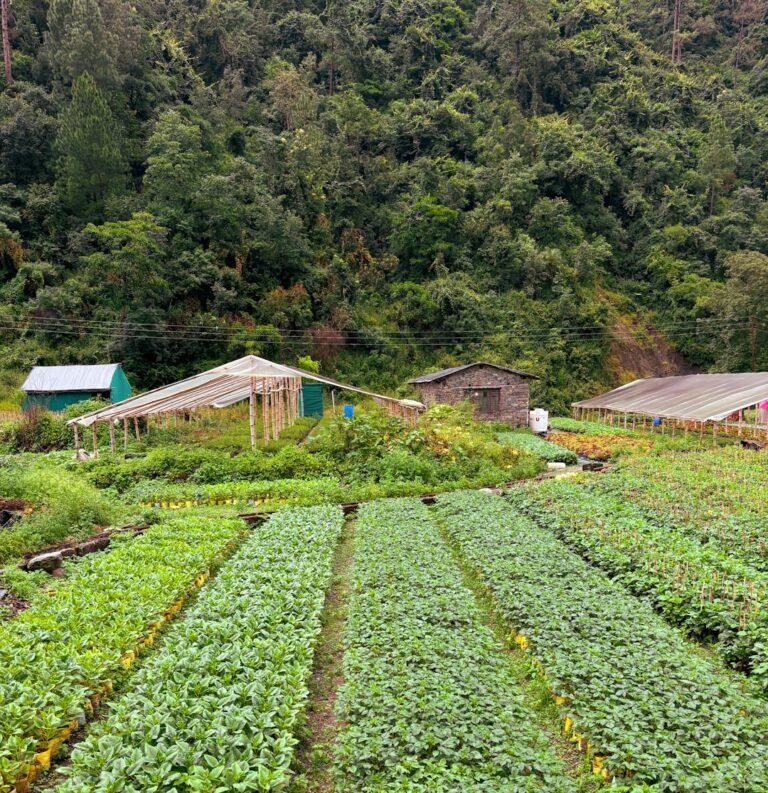
For a Tamil Nadu operator, a district-level population figure is not a useful demand estimate. Map the crop clusters within a practical travel radius. Identify the crops, acreage, crop calendar, common spraying windows, field access, water availability, existing service providers and the distance between bookings.
Speak with farmers and local agricultural networks in the exact villages you intend to serve. In one cluster, paddy may be the dominant crop; in another, coconut, banana, sugarcane, vegetables or other crops may shape the demand. Do not assume that a drone configuration or spray protocol suitable for one crop will be suitable for another.
A simple pre-purchase market survey
| Who to speak to | What to find out |
|---|---|
| At least 20–30 farmers | Crop, acreage, current spraying method, number of applications, current cost and willingness to trial a drone service |
| 2–3 FPOs or farmer groups | Member acreage, booking coordination, demonstration interest, payment process and seasonal demand |
| 3–5 input dealers or local agribusiness contacts | Common crop-protection needs, application timing and the questions farmers ask before adopting a service |
| Existing drone operators | Actual local service prices, travel radius, operating constraints, seasonal utilisation and customer objections |
| Agriculture department / KVK contacts | Local crop practices, demonstrations, safety guidance and relevant official scheme information |
Go/no-go test: Before purchasing, try to secure credible expressions of interest that add up to a realistic number of paid acres. Ask potential customers to confirm the crop, approximate acreage, likely timing, service scope and acceptable price. A verbal “we may use it” is not a booking.
4. What Equipment and Setup Do You Need?
A commercial agricultural spraying setup is more than the drone airframe. Compare complete operating packages and the local service support behind them. A lower purchase price can become expensive if batteries, spare parts, repairs or technical support are difficult to obtain.
| Component | What to check before buying |
|---|---|
| Agricultural spraying drone | Type certificate, UIN registration pathway, payload, spray system, flow-rate range, nozzle options, operating limitations and crop suitability |
| Battery package | Number of batteries included, realistic charging time, replacement cost, battery life, warranty and safe storage |
| Charging and power | Charger compatibility, power requirement, generator or backup needs and charging time between sorties |
| Spare parts | Availability and price of pumps, nozzles, motors, propellers, hoses, landing gear and electronic components |
| Software and controls | Flight planning, field mapping, logs, calibration, safety alerts and operator training |
| Transport and field kit | Vehicle or trailer, mixing and measuring equipment where permitted, PPE, barriers, signage and cleaning kit |
| Service support | Written warranty, response time, service location, AMC terms, training and loaner/backup support |
Obtain at least three written, comparable quotations. Ask each supplier to itemise the drone, batteries, charger, accessories, training, insurance, warranty, GST, AMC, spare parts and delivery. Request a live demonstration using the actual model and verify the model’s current type-certification status through DGCA records. Do not rely on a sales brochure or a verbal claim that a model is “government approved”.
5. How Much Investment May Be Required?
The source financial model used in this guide assumes an illustrative standard setup cost of ₹17.7 lakh. Treat this as a planning case carried forward from the working business model—not a current market quotation or a guaranteed all-inclusive price. Actual investment will vary with the drone model, payload, battery package, transport arrangement, warranty, training, financing and working-capital requirement.
| Investment head | What your budget should cover |
|---|---|
| Drone and spray package | Type-certified agricultural drone, spray assembly, controller and standard accessories |
| Battery and charging package | Additional batteries, chargers, hubs and backup power where needed |
| Transport | Vehicle purchase, lease or a realistic per-trip transport arrangement |
| Training and compliance | Applicable pilot training, certification, registration and operational familiarisation |
| Safety and field equipment | PPE, warning markers, first-aid and spill-response arrangements, cleaning and maintenance tools |
| Insurance and service support | Applicable third-party insurance, equipment cover, warranty extension or AMC |
| Working capital | Travel, wages, charging, repairs, marketing, booking gaps and delayed customer payments |
Do not spend the entire available capital on the drone itself. Keep a separate working-capital reserve. A machine that cannot travel to jobs, recharge reliably or remain operational after a repair will not generate revenue.
6. How Does the Per-Acre Revenue Model Work?
Many service providers quote by acre, but the price is meaningful only when the service scope is clear. State whether the fee includes the chemical, water, transport, field preparation, minimum booking size, repeat visits and taxes. The model below assumes a service fee of ₹600 per acre and a variable operating cost of ₹133 per acre. These are illustrative planning inputs from the working model, not a verified national tariff or a current local market survey.
| Illustrative price per acre | Variable cost assumption | Contribution per acre |
|---|---|---|
| ₹400 | ₹133 | ₹267 |
| ₹500 | ₹133 | ₹367 |
| ₹600 | ₹133 | ₹467 |
| ₹700 | ₹133 | ₹567 |
| ₹1,000 | ₹133 | ₹867 |
Contribution is the service price minus the assumed variable cost. It is the amount available to cover annual fixed costs and then produce accounting profit. It is not the operator’s take-home income.
What should be included in variable cost?
The ₹133 per-acre input is a simplified model assumption. In your own spreadsheet, calculate the cost of travel, pilot/helper time that varies with jobs, battery wear and replacement provision, charging or generator fuel, routine maintenance, consumables and any job-specific expense. If chemical or water is supplied by you, add those costs separately. If a booking is far away or covers only a few acres, the cost per acre may rise sharply.
7. Realistic Financial Projection: Three Utilisation Scenarios
The following scenario uses the same illustrative assumptions throughout: ₹17.7 lakh initial setup, ₹600 service revenue per acre, ₹133 variable cost per acre and ₹4.46 lakh annual fixed cost. The fixed-cost input is modelled as ₹1.36 lakh interest, ₹2.60 lakh depreciation, ₹0.20 lakh insurance and ₹0.30 lakh administration. The depreciation allowance is a model input; the depreciable asset base, useful life and tax treatment must be confirmed with an accountant and should not be assumed to equal the full ₹17.7 lakh setup cost. These are assumptions for analysis—not a quotation from a lender, insurer or supplier.
| Annual acres serviced | Operating days at 20 acres/day | Revenue at ₹600/acre | Variable cost | Accounting profit* |
|---|---|---|---|---|
| 1,200 | 60 | ₹7.20 lakh | ₹1.60 lakh | ₹1.14 lakh |
| 1,800 | 90 | ₹10.80 lakh | ₹2.39 lakh | ₹3.95 lakh |
| 2,400 | 120 | ₹14.40 lakh | ₹3.19 lakh | ₹6.75 lakh |
*Accounting profit calculation: (service revenue − variable cost − annual fixed cost). Figures are rounded. The 20 acres/day capacity is a planning assumption, not a guaranteed daily output. Actual daily coverage depends on field size, travel, battery turnaround, refill logistics, weather, crop and operating conditions.
What these scenarios really tell you
- At 1,200 acres a year, the model produces only about ₹1.14 lakh in accounting profit before tax and owner compensation. That may be inadequate for a full-time owner once loan principal repayments and personal living costs are considered.
- At 1,800 acres, the model improves, but it requires about 90 operating days at the assumed 20 acres/day—and enough local bookings to keep those days productive.
- At 2,400 acres, the model shows stronger accounting profit, but it requires about 120 productive operating days. Seasonal peaks, rain, wind, travel and downtime can make this utilisation difficult.
- An optimistic scenario is not a forecast. Do not borrow on the assumption that the highest-acreage case will automatically happen.
8. Break-Even: How Many Acres Must You Spray?
At a service price of ₹600 per acre and a variable cost of ₹133, the contribution is ₹467 per acre. Dividing annual fixed costs of ₹4.46 lakh by ₹467 gives a break-even requirement of approximately 955 acres per year. At an assumed 20 acres per operating day, that is roughly 48 productive days.
| Service price | Contribution per acre | Approx. break-even acres/year | Days at 20 acres/day |
|---|---|---|---|
| ₹400 | ₹267 | 1,670 | 84 |
| ₹500 | ₹367 | 1,215 | 61 |
| ₹600 | ₹467 | 955 | 48 |
| ₹700 | ₹567 | 787 | 40 |
| ₹1,000 | ₹867 | 515 | 26 |
This is a simplified accounting break-even, not a cash break-even. It includes the modelled interest and depreciation in fixed costs, but it does not include owner salary, income tax, loan principal repayments or any unbudgeted costs. A higher price reduces the number of acres required only if customers are willing to pay that price and the service scope remains comparable.
A caution on cash flow
Depreciation is a non-cash accounting expense. Loan principal repayment is a cash outflow but is not an accounting expense. Therefore, accounting profit and cash available in the bank are different. Before taking a loan, prepare a monthly repayment schedule and test whether seasonal receipts can cover EMI, operating costs, maintenance and household needs during low-demand months.
9. Government Subsidies: What Is Actually Available?
Government assistance is conditional. Eligibility depends on the scheme component, beneficiary type, equipment, state action plan, empanelment, application window and fund availability. Do not reduce your investment estimate by a subsidy until you have written confirmation that you qualify and understand when the money is disbursed.
SMAM – revised operational guidelines dated 18 December 2025
The revised Sub-Mission on Agricultural Mechanization (SMAM) guidelines include support for Kisan Drone Custom Hiring Centres (CHCs). For an agriculture graduate establishing a Kisan Drone CHC, the guidelines specify assistance of 50% of the basic cost of the agricultural drone and attachments, or ₹5 lakh, whichever is lower. The beneficiary must meet the applicable conditions, including the stated education and trained-pilot requirements. The CHC must also fall within the state implementation plan and district selection process.
The SMAM Annexure lists the Kisan Drone maximum permissible assistance as ₹5 lakh at the 50% rate for eligible categories and ₹4 lakh at the 40% rate for other eligible farmers. This is not a blanket subsidy for every private business owner. State-level implementation, eligible beneficiary category, approved equipment and application availability matter. Read the Revised SMAM Operational Guidelines (18 December 2025) and confirm the current Tamil Nadu process with the Agriculture Department before making any purchase.
Namo Drone Didi – do not assume a fresh application window
The Government’s 24 March 2026 reply described Namo Drone Didi as a ₹1,261 crore scheme for the period 2023–24 to 2025–26, providing 80% assistance up to ₹8 lakh to selected women Self-Help Groups (SHGs). The same reply reported that 17 of the 500 drones distributed by Lead Fertilizer Companies under the scheme were in Tamil Nadu. This was a targeted SHG programme, not a universal subsidy for individual entrepreneurs. Since the stated scheme period ended in 2025–26, do not assume that new applications are open in November 2026 without a fresh official notification. Source: Press Information Bureau, 24 March 2026.
Before applying: Ask the District Agriculture Office or the state nodal department for the current Tamil Nadu annual action plan, beneficiary eligibility, empanelled manufacturers, approved model list, application portal, fund availability, payment process and whether purchase must happen only after sanction. Get the answer in writing.
10. Legal, Pilot and Pesticide Compliance
This is a critical part of the business. A drone being available for sale does not mean it can be flown anywhere, by anyone, or with any pesticide.
Drone and pilot checks
- Verify that the exact drone model is type-certified where required and complete its applicable UIN registration process.
- Ensure the remote pilot holds a valid Remote Pilot Certificate for the applicable category, sub-category and class.
- Check the airspace status for the exact field on the official DigitalSky/eGCA systems before each operation. Yellow and red zones have additional permission requirements.
- Maintain visual line of sight (VLOS), safe separation from people and property, and the operating limits in the type certificate and manufacturer manual.
- Follow pre-flight and post-flight checks, maintenance instructions, weather limitations and incident reporting requirements.
- Ensure required third-party insurance is valid; confirm the exact policy scope and any applicable exemption rather than assuming cover.
DGCA’s Remote Pilot Certificate guidance specifically tells pilots to fly only type-certified and registered drones, hold the appropriate RPC, check airspace, maintain VLOS, keep safe distances, perform OEM checks and ensure valid third-party insurance. Start with the DGCA official portal and the Ministry of Civil Aviation drone guidance.
Pesticide approval is product-specific
Do not assume that a pesticide approved for conventional ground application is automatically approved for drone application. The Ministry of Agriculture has published SOPs for drone use and has referred to the CIB&RC process for testing and approving pesticide use through drones. Before every new product/crop combination, verify the latest CIB&RC approval, crop, dose, water volume, nozzle/application directions, buffer zones, label conditions and any state or local instructions. If the current approval cannot be verified, do not spray that product by drone.
The Government’s 2022 explanation of drone spraying SOPs and the CIB&RC approval process is available in this PIB release on drone services in agricultural practices. Always check the latest official record; this older release is background, not proof that a particular formulation is approved today.
11. Daily Operating Workflow
- Booking: Record the farmer/customer, location, crop, acreage, date, contact details and requested application.
- Product verification: Confirm the exact formulation and label conditions for drone use, crop and target. Reject unclear or unapproved requests.
- Field assessment: Check access, power lines, trees, people, animals, nearby homes, water bodies, field boundaries and take-off/landing space.
- Weather check: Assess wind, rain, visibility and the drone’s permitted operating envelope. Postpone if conditions are unsuitable.
- Job planning: Confirm the service area, price, minimum charge, who supplies product and water, travel fee and payment terms.
- Pre-flight: Check UIN, pilot credentials, airspace, insurance, batteries, propellers, pump, nozzles, leaks, calibration and failsafe systems.
- Operation: Follow the approved product label, crop-specific SOP, manufacturer procedure and safety buffer requirements.
- Record keeping: Log the date, field, crop, product, dose, area, weather, pilot, drone, battery and any incident or customer feedback.
- Post-job: Clean and maintain the equipment as prescribed, dispose of rinsate and packaging safely, recharge/store batteries correctly and collect payment.
12. How to Find Your First Customers
A drone operator should sell reliability and safe, correctly executed service—not just technology. Farmers need to know what crop and application the drone can handle, what the service costs, who is responsible for the product, and what happens if weather interrupts the job.
- Arrange a small, properly authorised demonstration with a farmer group or FPO and record genuine feedback.
- Build relationships with local FPOs, cooperatives, Custom Hiring Centres and farmer organisations.
- Work with agricultural input dealers only where product claims and application advice remain compliant.
- Create a village-level booking calendar around actual crop stages and suitable application windows.
- Use referrals: ask satisfied customers to introduce neighbouring farmers with similar crops and nearby fields.
- Offer transparent minimum booking and travel charges so small, scattered jobs do not quietly erode margins.
- Track every lead, quote, confirmed acre, completed acre, payment delay and repeat booking.
13. Major Risks and How to Reduce Them
| Risk | Why it matters | Practical response |
|---|---|---|
| Low utilisation | Fixed costs continue even when the drone is idle | Validate paid acreage before purchase; build FPO and village-level bookings |
| Seasonal demand | Work may cluster into short windows | Plan cash reserves and avoid assuming every month has equal revenue |
| Weather and wind | Operations may be postponed or unsafe | Set a weather cancellation policy and maintain a realistic schedule buffer |
| Battery or equipment failure | Downtime can cause missed jobs and repair costs | Budget spare batteries, maintenance and local service support |
| Regulatory or pesticide non-compliance | Can create safety, legal and financial exposure | Verify drone, pilot, airspace, insurance and product approvals before each job |
| Price competition | Low prices may not cover travel and maintenance | Calculate contribution per acre and quote transparently |
| Payment delays | Revenue on paper may not become cash on time | Use written booking terms, staged payments or reliable institutional customers |
| Customer dissatisfaction | Poor coverage or drift can damage trust | Follow approved SOPs, document jobs and avoid unsuitable conditions |
14. A 30-Day Pre-Investment Action Plan
| Period | Action | Evidence to collect |
|---|---|---|
| Days 1–7 | Map crop clusters and identify target villages | Crop calendar, acreage estimate, travel radius and farmer contacts |
| Days 8–14 | Interview farmers, FPOs and existing operators | Actual local quotes, willingness to pay, competitor availability and objections |
| Days 15–20 | Check regulations and subsidy eligibility | Written confirmation on model, pilot, airspace, insurance, pesticide and scheme conditions |
| Days 21–25 | Compare suppliers and financing | Three itemised quotations, warranty, battery cost, AMC, loan EMI and service response |
| Days 26–30 | Build a monthly cash-flow model and secure trial bookings | Confirmed acres, seasonal schedule, cost per job and a go/no-go decision |
15. Questions to Ask Before You Buy
- How many acres can I realistically service within a 20–30 km radius during the main crop season?
- How many of those acres are likely to become paid bookings—not just expressions of interest?
- What is the going local service price, and exactly what does that price include?
- Which crop/product combinations are currently approved for drone application?
- Is the exact drone model type-certified and can it be registered as required?
- Who will pilot the drone, and does that person hold the correct certificate?
- How long will the machine be out of service if a pump, motor, battery or controller fails?
- Can I afford the loan EMI during months with few bookings?
- Does the business still work if I service only 1,200 acres in a year?
- What is my exit plan if demand is lower than expected?
16. Frequently Asked Questions
Can I start this business with one agricultural drone?
A single-drone operation may be possible, but the business still needs a trained pilot, compliant equipment, batteries and charging, transport, insurance, maintenance, working capital and a dependable customer pipeline. Start with the minimum safe and supportable setup—not the cheapest possible package.
Can I charge ₹500 or ₹600 per acre?
You can test a price, but there is no single national tariff that guarantees acceptance. Compare at least five local quotes and define whether chemicals, water, transport, minimum booking and taxes are included. Calculate the contribution after your own variable costs before accepting work.
Can I earn ₹50,000 per month?
It is not responsible to promise a monthly income. The illustrative model in this guide produces about ₹1.14 lakh accounting profit for 1,200 acres in a year at ₹600 per acre under the stated assumptions. That is before owner compensation and tax, and it excludes loan principal repayments from the accounting-profit calculation. Monthly results will vary with seasonality and utilisation.
Is a government subsidy guaranteed?
No. Scheme support depends on beneficiary eligibility, equipment, state action plan, empanelment, application timing and fund availability. Never buy a drone assuming that a subsidy will be approved later.
Can I spray any pesticide using a drone?
No. Verify the current CIB&RC approval and label conditions for the exact product, crop and drone application. Do not infer drone approval from a ground-spraying label.
Should I buy the drone before finding customers?
Not if you can validate demand first. Speak with farmers, FPOs and existing operators, collect written quotations, confirm regulatory conditions and build a conservative acreage forecast before committing capital.
17. Simply Business Hub – Final Assessment
Agricultural drone spraying can be a viable local service business where there is sufficient crop concentration, farmer acceptance, legally permitted applications, strong operating discipline and enough annual utilisation to cover the capital cost. It is not automatically profitable because a drone can cover a field quickly. Travel, weather, battery turnaround, seasonal demand, pricing, compliance and payment collection determine the economics.
Our recommendation: Validate the market first. Obtain written equipment quotations. Confirm current Tamil Nadu scheme availability. Check the exact drone and pilot requirements. Verify pesticide permissions product by product. Then build a monthly cash-flow model that includes loan principal repayments and owner compensation. If the numbers work only under an optimistic acreage assumption, postpone the purchase.
At Simply Business Hub, we believe a good business decision starts with clear assumptions, verified information and a realistic view of risk—not an income promise.
Explore more: Business Ideas · Agriculture & Food Business
Sources and Further Reading
- Ministry of Civil Aviation – Drone ecosystem and regulatory information (status reported as of 17 October 2026).
- Government of India – Revised SMAM Operational Guidelines, 18 December 2025.
- Press Information Bureau – Sub-Mission on Agricultural Mechanization, 9 July 2026.
- Press Information Bureau – Namo Drone Didi scheme reply, 24 March 2026.
- Press Information Bureau – Drone services in agricultural practices and pesticide SOP context, 25 March 2022.
- DGCA – UAS model inventory.
Important disclaimer: This article is for general educational and business-planning purposes. It is not legal, pesticide-use, aviation, financial, tax or investment advice. Regulations, scheme rules, product approvals, prices and local demand can change. Verify all requirements with the relevant authorities, manufacturer, insurer, lender and qualified professionals before purchasing equipment or undertaking operations. All financial projections are illustrative and are not a guarantee of earnings.