Seeds are not being turned into roots or ordinary rope. The method shown in the viral farming video is called seed tape sowing: seeds are placed at planned intervals inside or onto a biodegradable paper carrier, which is then laid in a prepared furrow. Moisture softens and breaks down the paper while the seeds germinate in their intended positions.
This guide explains how seed tape farming in India could work, what the machinery actually does, where the method is useful, which claims are realistic, and how someone could test it without making a large investment.
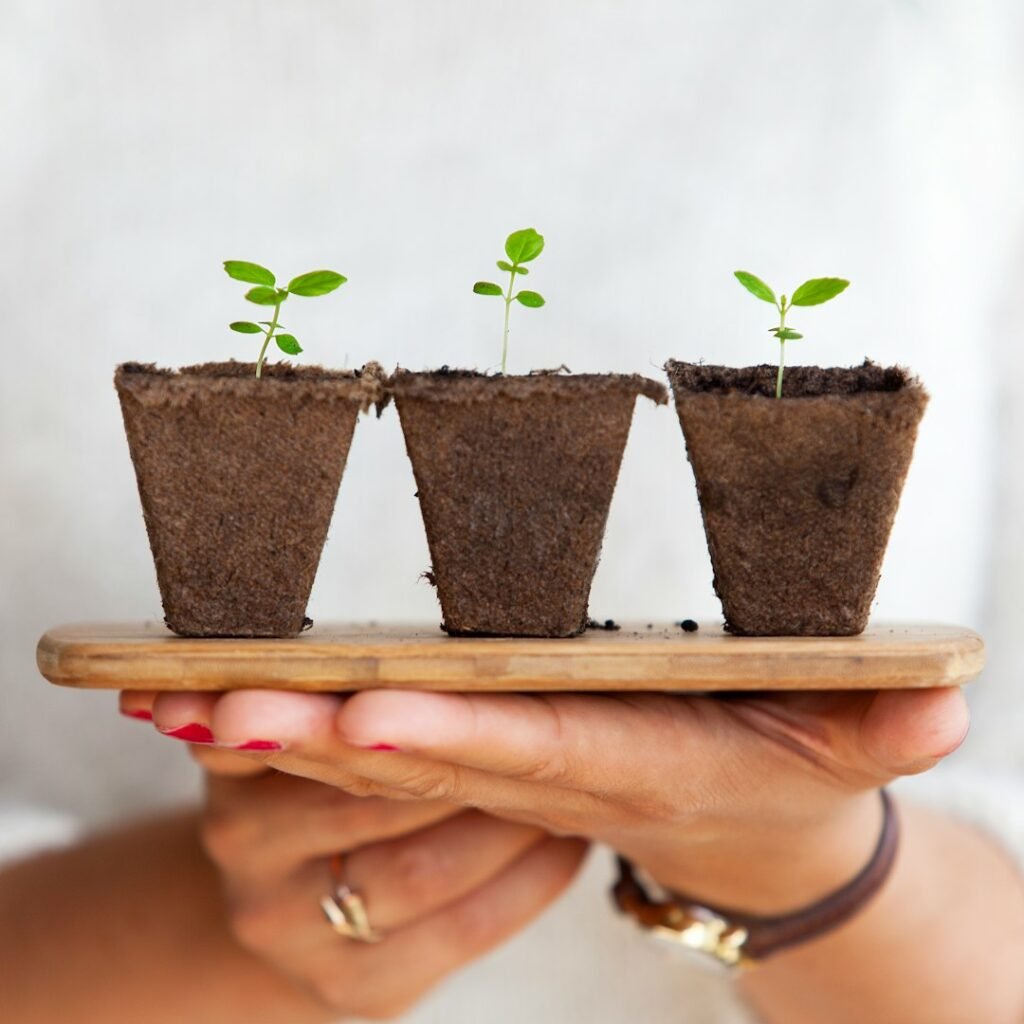
Featured photo by Daniel Öberg on Unsplash. The photograph is illustrative; seed tape itself is a thin biodegradable carrier containing pre-spaced seeds.
What Is Seed Tape?
Seed tape is a narrow strip or cord-like carrier that holds seeds at predetermined intervals. Depending on the system, seeds may be placed between two paper layers, attached to a paper strip with a water-based adhesive, or enclosed in a twisted biodegradable paper tape.
The spacing is selected for the crop. Once the tape is laid at the correct sowing depth and covered as required, the carrier absorbs moisture and gradually loses its structure. The seed then germinates in the soil. The paper does not create roots, fertilise the crop automatically, or guarantee germination.
How the Rotating Seed-Tape Machine Works
- Seed feeding: cleaned and graded seeds enter a hopper or feeding unit.
- Metering: a mechanical, pneumatic or sensor-assisted mechanism releases one seed or a selected number of seeds at each programmed position.
- Paper feeding: one or two narrow paper webs move through the machine continuously.
- Placement: seeds are deposited at the required interval. Accuracy depends on seed uniformity, machine calibration and operating speed.
- Sealing or twisting: the paper is folded, pasted or twisted around the seeds to form a continuous tape.
- Winding: the finished seed tape is collected onto a reel for storage and field placement.
The machine shown in a Reel may look as if it is making a rope, but its real job is precision metering and packaging. A separate tape-laying attachment or a manual operator can place the finished roll in the field.
How Seed Tape Is Planted
- Prepare a fine, level seedbed without large clods.
- Open a straight furrow at the depth recommended for that crop and variety.
- Unroll the tape without stretching, tearing or overlapping it.
- Keep the tape in contact with the soil and cover it according to the crop’s sowing requirement.
- Water gently and maintain even moisture during germination.
- Check emergence and replant gaps only where necessary.
Correct depth still matters. A seed tape placed too deep, allowed to dry out, buried under crusted soil or used with low-germination seed can perform poorly. Farmers should follow the seed supplier’s agronomic recommendation rather than copying the spacing visible in a social-media video.
What Benefits Are Realistic?
- More consistent spacing: pre-positioned seeds can produce a more orderly crop stand when placement and germination are successful.
- Easier handling of tiny seeds: carrot, lettuce, onion, herb and flower seeds can be difficult to distribute evenly by hand.
- Lower seed overuse: precise placement can reduce the tendency to sow excessive seed as insurance.
- Less thinning: accurate spacing may reduce later removal of crowded seedlings, although it may not eliminate thinning when multiple seeds germinate together.
- Simpler row establishment: long tapes can help create straight, traceable rows.
- Off-season preparation: tape can be prepared before the sowing window, shifting part of the workload away from field day.
Important reality check: seed tape can reduce sowing and thinning work, but there is no credible basis for saying it universally saves one full month. The saving depends on crop, area, labour method, germination, equipment and how thinning is normally performed.
What Research Has Actually Reported
A published review of crop seed-tape technology describes its main advantages as accurate control of plant or hill spacing, simpler field sowing and more orderly crop establishment. It also stresses that tape-making and tape-laying equipment reliability determines whether those advantages are achieved.
An older Japanese field study on direct-seeded rice gives useful engineering evidence, but it should not be treated as a modern India-wide promise. Its paper tapes were 3.4 cm wide and 120 m long. The reported machine produced 3,300 m of tape for 10 ares—1,000 square metres—in about 40 minutes. Seed spots were approximately 15 cm apart. A 5 kg tape-laying machine worked at a reported field efficiency of 6.8 to 9.0 ares per hour, and germination in the two reported test cases was 86 to 98 percent.
Those figures came from specific rice varieties, machinery, soil preparation and experimental conditions published in 1970. They prove that the principle can work; they do not guarantee the same speed, germination or yield for another crop, machine, location or season.
Seed Tape vs Conventional Sowing
| Method | Main advantage | Main limitation | Best fit |
|---|---|---|---|
| Broadcast sowing | Fast and simple over an area | Less control over position and crowding | Crops and situations where exact spacing is not essential |
| Manual spot sowing | Low equipment requirement | Slow and labour-intensive for tiny seeds | Small plots and large, easy-to-handle seeds |
| Seed tape | Seeds are pre-spaced and easy to lay in rows | Added material, preparation and moisture-management cost | Small seeds, high-value rows, nurseries and gardens |
| Precision seed drill | High field capacity with controlled depth and rate | Machine cost and calibration requirement | Larger commercial areas where scale justifies equipment |
Which Crops Are Most Suitable?
Seed tape is most attractive where seeds are small, difficult to handle, relatively valuable, or normally sown too densely. Potential examples include:
- Carrot, radish, beetroot and turnip
- Lettuce and selected leafy vegetables
- Onion and some herb seeds
- Flower seeds for organised beds
- Nursery and kitchen-garden seed kits
- Selected direct-seeded rice systems after local agronomic validation
It may be less attractive for large, inexpensive seeds that are already easy to meter; broad-acre crops served efficiently by existing seed drills; very stony or cloddy fields; or farms where the carrier cost is greater than the labour saved.
Can You Make Seed Tape Without a Machine?
Yes, for a garden-scale trial. University extension guidance describes a simple method using thin paper and a water-based or cornstarch adhesive.
- Cut untreated, biodegradable paper into narrow strips.
- Mark the crop’s recommended spacing on the strip.
- Apply very small dots of a non-toxic water-based paste.
- Place the seeds and fold or cover the paper.
- Allow the tape to dry completely before loosely winding and labelling it.
- Run a short germination comparison against conventionally sown seed before scaling.
Avoid glossy paper, plastic tape, solvent-based glue, excessive adhesive and ink-heavy printed material. A DIY test is suitable for learning and home use; commercial seed products require controlled materials, germination testing, accurate labelling and regulatory checks.
Is There a Business Opportunity in India?
There may be a niche opportunity, but the strongest entry is not immediately buying a large machine. Start by identifying a customer problem and testing whether buyers will pay for the convenience.
| Possible model | Target customer | What must be validated |
|---|---|---|
| Pre-spaced garden seed rolls | Home gardeners and terrace gardeners | Germination, shelf life, clear instructions and repeat demand |
| Crop-specific seed-tape kits | Schools, nurseries and gardening stores | Pack size, safe carrier material and retail margin |
| Custom tape preparation service | Vegetable growers and seed companies | Required spacing, speed, seed damage and cost per metre |
| Tape-laying equipment or attachments | Commercial farms and farmer groups | Local field conditions, durability, after-sales support and acreage |
| Contract pilot trials | FPOs, universities and agritech firms | Measured labour, emergence, thinning and yield against a control plot |
A responsible commercial pilot should compare equal seed lots across a seed-tape row and a conventional row. Record metres laid per hour, seed used, emergence percentage, gap rate, thinning labour, material cost and final marketable yield. Only those measurements can show whether the system creates value in a particular farm.
Compliance Before Selling Seed Tape
When a product contains seed for sale, it is not merely a paper craft. India’s Seeds Act, 1966, the Seeds Rules, 1968, the Seeds (Control) Order, 1983, state-level licensing requirements, labelling rules and applicable packaged-commodity requirements may become relevant.
Requirements differ by seed type, variety, role and state. Before buying, repacking or selling seeds, confirm the current position with the State Agriculture Department, seed-control authority and a qualified compliance professional. Do not print germination, purity, treatment or performance claims without evidence.
Risks and Limitations
- Paper strength can fall too early in humid storage or fail to break down as expected if the material is unsuitable.
- Excess paste or poor carrier permeability may interfere with moisture and oxygen reaching the seed.
- Irregular seed size can cause missed positions or multiple drops in a machine.
- Poor seedbed preparation can prevent uniform tape contact and emergence.
- Birds, insects, disease, salinity, temperature and irrigation still affect germination.
- Pre-spacing cannot compensate for weak or incorrectly stored seed.
- A paper-and-processing cost that looks small per metre may become significant over a large area.
Frequently Asked Questions
Does the paper disappear completely?
A genuinely biodegradable, untreated paper carrier should soften and decompose under suitable soil moisture and biological activity. The timing varies with material, thickness, soil and weather. It should not be confused with plastic adhesive tape.
Does seed tape improve germination?
It can improve placement consistency, but germination is controlled by seed quality, moisture, temperature, oxygen, depth, soil condition and crop biology. Seed tape alone cannot guarantee a higher germination percentage.
Will farmers never need to thin seedlings?
Accurate spacing can reduce thinning, especially for tiny seeds, but thinning may still be required when multiple seeds are placed at one point or when establishment is uneven.
Can seed tape be used on a large farm?
Yes, specialised systems have been studied for field crops, including direct-seeded rice. Commercial viability depends on tape cost, machine speed, field condition, crop value and comparison with a precision seed drill.
How much does a seed-tape machine cost?
There is no reliable universal price. Capacity, seed metering technology, tape width, automation, imported components, taxes, freight and service support vary widely. Request a live demonstration using your actual seed and calculate cost per usable metre before purchasing.
Practical Recommendation
Begin with a small controlled trial, not a machinery purchase. Choose one crop that is normally difficult to space, prepare enough tape for two or three short rows, and keep conventionally sown rows beside them. Compare the full result from sowing to harvest. If the tape consistently reduces seed use or labour without harming emergence or yield, test a larger plot and then evaluate commercial equipment.
Explore more evidence-based agriculture and food business ideas, including our guide to the Azolla farming business in India.
Sources and Further Reading
- The Analysis of the Applications of Crop Seed Tape Sowing Technology and Equipment: A Review, Applied Sciences.
- Direct Seeding of Rice by Seed Tape, Japan Agricultural Research Quarterly.
- Propagating Plants from Seed, Pacific Northwest Extension publication.
- Pelleted seed and DIY seed tape guidance, University of Illinois Extension.
- Seeds Act, 1966, India Code.
Disclaimer: This article is for education and early-stage business evaluation. It does not guarantee germination, yield, labour savings, profit or regulatory approval. Agronomic results vary by crop, seed lot, soil, climate, irrigation, carrier material and operating method. Conduct local trials and consult the relevant agriculture and seed authorities before commercial production or sale.