1. Executive Summary
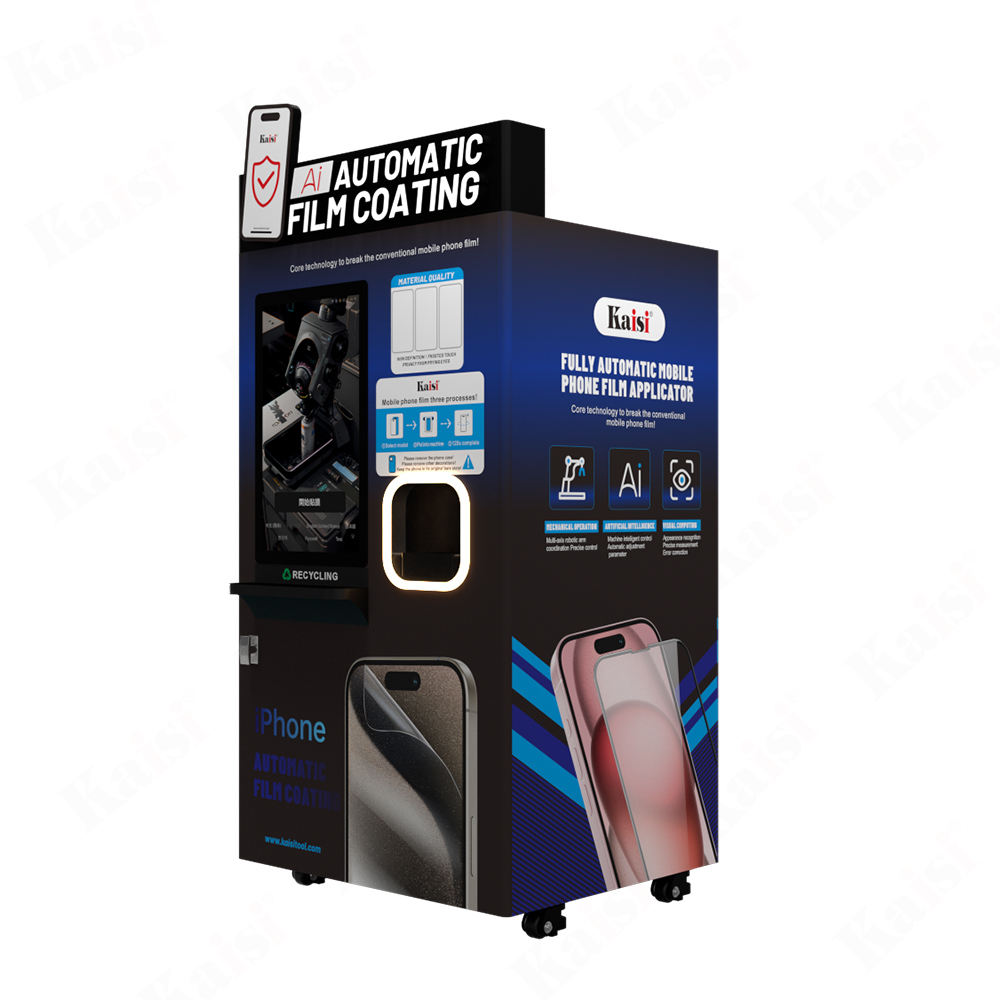
You will purchase an automatic vending machine that detects phone model, applies a screen protector (tempered glass / film) bubble-free via mechanical/AI mechanism, and dispenses the finished phone to customers. You install it in high footfall locations (e.g. busy malls, railway or bus stations, busy streets) so that many people use it.
Goal: Recover investment and generate net profit of ~ ₹1,00,000/month after all expenses, with reasonable utilization.
2. Market Analysis
-
The smartphone screen protector market in India is large and growing; revenue ~$2,478.5 million in 2023, expected to nearly double by 2030. (Grand View Research)
-
Tempered glass is the largest & fastest-growing segment. (Grand View Research)
-
Many people buy protectors but dislike manual application (bubbles, wrong fit), so convenience & accuracy are strong value propositions.
3. Investment / Setup Costs
Here are the approximate costs to get started, with assumptions.
| Item | Estimated Cost (Salem / similar city) | Notes / Assumptions |
|---|---|---|
| Machine Purchase | ₹1,50,000 – ₹4,00,000 | Depending on sophistication (AI detection, automatic pasting, touch screen UI, cashless/UPI payment, number of phone models stocked). If you import from Alibaba / international / OEM, add shipping, customs etc. |
| Initial Inventory (Screen Guards) | ₹20,000 – ₹50,000 | Stock different sizes & types (normal, privacy, tempered glass etc.). Suppose ~500–2000 pieces initially. |
| Rent / Location Cost | ₹5,000 – ₹30,000 / month per location | Depends on where you place (mall kiosks are expensive, bus stand maybe less). If multiple machines, multiple locations. |
| Electricity & Internet / Maintenance | ₹1,000 – ₹5,000 / month | Power, connectivity, cleaning, minor repairs. |
| Licenses / Permits / Insurance | ₹5,000 – ₹20,000 | Local municipal permissions, business registration, possibly safety or electronics compliances. |
| Marketing & Branding | ₹5,000 – ₹20,000 initially + monthly budget | Signage, social media, flyers, local tie-ups. |
| Transport / Installation | ₹2,000 – ₹10,000 | Moving the machines, placing securely. |
Total initial investment: Something like ₹2,00,000 – ₹5,00,000 depending on number of machines, sophistication, location cost etc.
4. Operational Plan
A. Machine Specs / Where to Buy
-
Identify suppliers: Alibaba, OEMs in China, or Indian manufacturers. Key specs needed:
-
Model detection (many phone models)
-
Bubble-free application (good mechanism)
-
Payment options: card / UPI / wallet / cash
-
Capacity: how many screen guard types stored
-
Maintenance & spare parts
-
-
Ask for sample, warranty, support. Shipping + customs duty if importing.
B. Inventory & Supplies
-
Screen guards from reputed manufacturers; quality is critical.
-
Stock common models (Samsung, iPhone, Xiaomi etc.), and some rare ones.
-
Maintenance supplies: cleaning agents, spare glass, adhesives etc.
C. Location & Installation
-
Best locations: Malls (entrances, food courts), Railway stations, Bus stands, major shopping streets, tech market areas.
-
Negotiate rental/commission: you may have to pay a fixed monthly rent or a revenue sharing model with mall owner / station.
-
Secure power supply, internet connectivity. Ensure visibility, signage, lighting.
D. Staffing & Maintenance
-
Minimal staff needed if machine is automatic; but someone needs to check machine daily: refill inventory, clean, fix small jams, collect cash or check digital payments.
-
Possibly outsource maintenance or have a technician on retainer.
5. Revenue Projections (Assumptions + Scenarios)
Let’s run a few scenarios with assumptions.
Assumptions
-
Price charged per screen guard + application = ₹200 (could vary: cheaper/expensive types)
-
Machine serves 30 customers/day on average (across a high footfall location)
-
Operating days per month = 30
-
Inventory cost per guard (supplier cost + packaging etc) = ~₹60 (varies by type)
-
Rent + electricity + maintenance etc per machine location = ~₹15,000/month
-
Other overheads (marketing, transport, depreciation) = ₹5,000-₹10,000/month
Scenario A: “Good” Utilization
| Metric | Value |
|---|---|
| Customers/day | 30 |
| Days/month | 30 |
| Gross revenue/month | 30 × 30 × ₹200 = ₹1,80,000 |
| Cost of goods (30 × 30 × ₹60) | ₹54,000 |
| Rent & utilities etc | ₹15,000 |
| Other overheads | ₹10,000 |
| Depreciation / Machine loan repayment | ₹10,000 |
| Total monthly costs | ~₹89,000 |
| Estimated net profit/month | ~₹91,000 |
So approx ₹90,000-₹1,00,000 net profit if things go well.
Scenario B: Balanced / Moderate Utilization
-
Customers/day = 20
-
Gross revenue = 20 × 30 × ₹200 = ₹1,20,000
-
COGS = 20×30×₹60 = ₹36,000
-
Rent etc = ₹15,000, overheads = ₹10,000, depreciation = ₹10,000
-
Costs = ~₹71,000 → Profit ~ ₹49,000
So about ₹40,000-₹60,000 net in moderate case.
Break-even Analysis
-
If you spend initial investment of, say, ₹3,00,000, you want to recover it in less than 12 months. With net profit of ~₹90,000, you recover in ~4 months. With lower usage scenario, maybe in ~6-8 months.
6. Marketing, Sales & Growth Strategy
To get consistent demand and support growth, these actions help:
-
High Visibility Signage on machine (bright, attractive), possibly video/digital display showing how it works.
-
Intro Offers / Discounts: Opening day offers; first few days free installations; bundling with other accessories.
-
Collaboration with malls / stations: Mall listing, promotions in their social media; station authorities.
-
Digital Marketing: Reels / shorts showing how smooth the process is; social proof (customer videos). Use Instagram, TikTok, WhatsApp status etc.
-
Local Advertising: Posters, flyers, local tech shops, mobile repair shops.
-
Referral / Word of Mouth: Offer small discounts if people refer others etc.
-
Multiple Locations: Once one machine is profitable, replicate in other locations to scale.
-
Maintenance of Quality: Ensuring application is perfect, staff / machine kept clean, inventory fresh; customer satisfaction matters for repeat and positive word of mouth.
7. Risks & Mitigations
| Risk | Impact | Mitigation |
|---|---|---|
| Low customer usage | Low revenue | Choose right location; test before scaling; possibly share revenue with location partner to reduce rent cost. |
| Machine breakdown / poor quality | Customer dissatisfaction, repair cost | Choose reliable supplier; ensure warranty; have spare parts; regular maintenance. |
| Theft / Vandalism | Loss of machine / damage | Place in secure, monitored locations; CCTV; locked structures. |
| Inventory mismatch (wrong models or unsold stock) | Waste / loss | Analyze local phone model popularity; keep only high demand models initially. |
| High rental / commission cost at prime spots | Reduces profitability | Negotiate; try less expensive high-footfall spots; revenue share instead of flat rent. |
| Competition | Others doing similar things or cheaper manual shops | Maintain high quality, convenience, better service, good marketing. |
8. Financial Plan & Timeline
Here’s a sample timeline and stages.
| Month | Activities |
|---|---|
| Month 0 | Research suppliers; get quotations; fix specifications; get sample; finalize location(s); arrange approvals. |
| Month 1 | Purchase machine(s), import or domestic; stock initial inventory; install at first location; launch marketing campaign. |
| Month 2-3 | Monitor usage rates; collect feedback; refine inventory (which phone models see demand); tweak pricing if needed. |
| Month 4-6 | Reach breakeven; increase marketing; explore 2nd / 3rd location. |
| Month 7-12 | Scale; negotiate better deals with suppliers; perhaps brand / customer loyalty; possibly franchise model or hiring staff for multiple machines. |
9. Example Financials (1-year Projection)
Assume you start with 1 machine in a mall, good location.
| Month | Revenue | Cost of Goods | Rent & Utilities & Overhead | Profit (before depreciation) |
|---|---|---|---|---|
| 1 | ~₹1,50,000 | ₹45,000 | ₹25,000 | ₹80,000 |
| 2 | ~₹1,70,000 | ₹51,000 | ₹25,000 | ₹94,000 |
| 3-6 (average) | ~₹1,80,000 | ₹54,000 | ₹25,000 | ~₹1,01,000 |
| 7-12 (after scaling, better awareness) | ~₹2,00,000 (could rise with more customers or premium guards) | ₹60,000 | ₹30,000 | ~₹1,10,000 |
Cumulatively over year, profit ~ ₹8-10 lakhs after recovering investment etc.
10. Key Metrics To Track
-
Customers per day
-
Average ticket value (maybe some people buy premium guard for ₹300-₹400)
-
Utilization rate of machine (inventory turn)
-
Cost per unit of guard, wastage rate
-
Machine downtime / maintenance cost
-
Rent as % of revenue
-
Payback period
11. Legal / Regulatory / Compliance
-
Business registration (GST etc)
-
Import duty / customs if importing machine/inventory
-
Safety / electrical standards
-
Permission from location owners / public authorities
-
Insurance for machine / theft / liability
12. Conclusion
With careful planning, good machine, excellent location(s), and consistent marketing, the business is realistic. The upper range of profit (₹90,000-₹1,20,000/month) is possible in high usage scenario. More modest scenario still gives ₹40,000-₹60,000/month which is decent. The key is location, machine reliability, inventory management, and customer experience.