SIMPLY BUSINESS HUB · FREE MONEY GUIDE
5 POST OFFICE INVESTMENT SCHEMES
Up to 8.2% interest · Tax · Maturity · Complete comparison
Rates verified 27 September 2026 · Valid for July–September 2026. Independent educational guide, not an official India Post publication.
Have savings for a daughter’s education, your retirement or a long-term family goal? Government-backed small-savings schemes provide different ways to earn interest. But the highest headline rate is not automatically the highest after-tax return. This free guide explains the five schemes featured in our carousel, with eligibility, investment limits, calculations, tax treatment, withdrawal restrictions and application steps.
Jump to: Comparison · SSY · SCSS · NSC · KVP · PPF · Bonus · Tax and ETFs · How to apply · FAQs
At-a-glance comparison
| Scheme | Rate p.a. | Tenure | Deposit | Tax treatment |
|---|---|---|---|---|
| Sukanya Samriddhi (SSY) | 8.2% | 21 years from opening | ₹250–₹1.5 lakh/year | Tax-free interest and qualifying maturity |
| Senior Citizens (SCSS) | 8.2% | 5 years; extendable | ₹1,000–₹30 lakh | Taxable quarterly income |
| National Savings Certificate (NSC) | 7.7% | 5 years | ₹1,000 minimum; no scheme cap | Taxable compounded interest |
| Kisan Vikas Patra (KVP) | 7.5% | 115 months | ₹1,000 minimum; no scheme cap | Taxable; predetermined doubling |
| Public Provident Fund (PPF) | 7.1% | 15-year original term | ₹500–₹1.5 lakh/year | Tax-free interest and maturity |
1. Sukanya Samriddhi Yojana (SSY) — 8.2%
Who can open it? A parent or legal guardian for an eligible girl child below age 10, under the applicable family/account rules. The account is in the child’s name.
| Key factor | What to know |
|---|---|
| Minimum deposit | ₹250 per financial year |
| Maximum deposit | ₹1.5 lakh per financial year |
| Contribution window | First 15 years from account opening |
| Normal maturity | 21 years from opening |
| Education withdrawal | Up to 50% of eligible balance under qualifying age/education conditions |
| Tax | Eligible old-regime 80C contribution; interest and qualifying maturity proceeds tax-free |
The advertised 8.2% is the current rate, not a rate fixed for all 21 years. Qualifying early closure provisions also exist, including marriage after the prescribed age and conditions.
2. Senior Citizens’ Savings Scheme (SCSS) — 8.2%
Designed for eligible senior citizens, generally age 60 or older, with specified exceptions for qualifying retired employees and defence retirees. Minimum deposit ₹1,000; maximum ₹30 lakh under the scheme’s aggregation rules. The original term is five years, with permitted extension.
₹30 lakh → ₹61,500 every quarter
₹30,00,000 × 8.2% ÷ 4 = ₹61,500; annual interest ₹2,46,000.
Interest is paid quarterly and is taxable, rather than automatically compounded in the account. Eligible investment may qualify for Section 80C under the old tax regime. Premature closure is subject to timing-dependent deductions. Original principal is payable according to maturity/closure rules.
3. National Savings Certificate (NSC) — 7.7%
NSC is a five-year accumulating certificate. The minimum investment is ₹1,000 and there is no scheme-level maximum. The rate applicable to the issue is compounded annually; there is no regular income payout.
₹1,00,000 → approximately ₹1,44,900
About ₹44,900 accumulated interest in five years at 7.7%.
Initial investment can qualify for Section 80C under the old regime, within the combined deduction limit. Accrued interest is taxable; qualifying interest treated as reinvested in the first four years may also be eligible for 80C, subject to conditions. Final-year interest is not reinvested. Ordinary premature encashment is restricted to specified statutory exceptions.
4. Kisan Vikas Patra (KVP) — 7.5%
KVP provides a predetermined nominal doubling amount at the notified maturity for that issue. It is not restricted to farmers. Minimum investment is ₹1,000 and there is no scheme-level maximum.
₹1 lakh → ₹2 lakh in 115 months
9 years and 7 months. A 100% total nominal gain is not a 100% annual return.
KVP does not qualify for a Section 80C investment deduction and its interest is taxable. General encashment is permitted after two years and six months under prescribed schedules; exceptional earlier closure rules apply in limited circumstances.
For a dedicated calculation and opening guide, read our complete KVP article.
5. Public Provident Fund (PPF) — 7.1%
PPF is a long-term accumulation account for eligible individuals. Deposit at least ₹500 and no more than ₹1.5 lakh per financial year under the applicable combined limit. Its original tenure is 15 years calculated from the end of the opening financial year; extension choices are available in five-year blocks.
| Key factor | What to know |
|---|---|
| Interest | Current 7.1%; annually compounded; periodically revised |
| Tax | Old-regime 80C contribution deduction where eligible; tax-free interest and maturity |
| Liquidity | Loans and partial withdrawals under specific year-based rules |
| Early closure | Only for qualifying conditions after prescribed period |
PPF calculates monthly interest using the lowest balance between the close of the 5th and the last day of the month. Depositing before the 5th can matter for that month’s interest, subject to processing.
Bonus: two other Post Office schemes
Monthly Income Scheme (MIS) — 7.4%
Five-year scheme paying monthly interest. Maximum deposit ₹9 lakh in a single account or ₹15 lakh in a joint account under applicable ownership limits. At the current rate, ₹9 lakh produces ₹5,550 per month before tax. Interest is taxable; premature closure carries conditions/deductions.
Five-year Time Deposit — 7.5%
Minimum ₹1,000; no scheme-level maximum. Interest is compounded quarterly but paid annually. The five-year deposit may qualify for Section 80C under the old regime. Interest is taxable and early closure changes the applicable return.
Tax, safety and ETF comparison
These are government-backed nominal savings products, not equity-market investments. An equity ETF tracks an index and fluctuates with market prices; returns are not assured. Debt ETFs have their own interest-rate, credit, liquidity and tax considerations. Comparing only a Post Office coupon and a historical ETF return is misleading. Consider time horizon, withdrawal needs, tax treatment and fluctuations.
| Scheme | 80C investment deduction (old regime) | Interest treatment |
|---|---|---|
| SSY | Eligible; within combined limit | Tax-free |
| SCSS | Eligible; within combined limit | Taxable |
| NSC | Eligible; qualifying reinvested interest may count | Taxable |
| KVP | No | Taxable |
| PPF | Eligible; within combined limit | Tax-free |
| MIS | No | Taxable |
| 5-year TD | Eligible; within combined limit | Taxable |
Section 80C ordinarily has a combined ₹1.5 lakh annual limit. Standard 80C deductions generally do not apply under the new tax regime. TDS and final income-tax liability depend on current law and your individual circumstances. Sovereign backing does not remove inflation or liquidity risk.
How to open an account: documents and steps
- Check the latest rate, purpose and your eligibility for the selected scheme.
- Visit an authorised Post Office branch, or check available transactions in a linked Post Office Savings Bank internet-banking account.
- Complete the applicable opening form and nomination details.
- Carry PAN (or applicable Form 60), Aadhaar or accepted KYC identity/address documentation, photographs and deposit funding details, as required by the branch.
- For SSY, take the child’s birth certificate and guardian details. For SCSS below the ordinary age threshold, bring applicable retirement documents.
- Check the receipt, account/certificate details, nominee and maturity conditions before leaving.
Forms, KYC thresholds and remote-opening availability may change. Confirm requirements at the branch or on India Post’s official savings portal.
Frequently asked questions
Can everyone earn 8.2%?
No. The current 8.2% schemes have girl-child or senior-citizen eligibility restrictions.
Will my KVP double in one year?
No. The current doubling period is 115 months, or 9 years and 7 months.
Can I withdraw at any time?
No. Each scheme has distinct partial-withdrawal, closure and penalty rules.
Are PPF and SSY rates fixed for the entire tenure?
No, government rates are periodically revised.
Which product gives monthly income?
Post Office MIS pays monthly; eligible SCSS holders receive quarterly payouts.
Official sources and disclosures
Checked 27 September 2026. Rates apply July–September 2026; verify the next quarterly notification for investments from October onward.
- Ministry of Finance — Small Savings interest notifications
- India Post — schemes, KYC and FAQs
- India Post — savings scheme rules
- Income Tax Department — current tax guidance
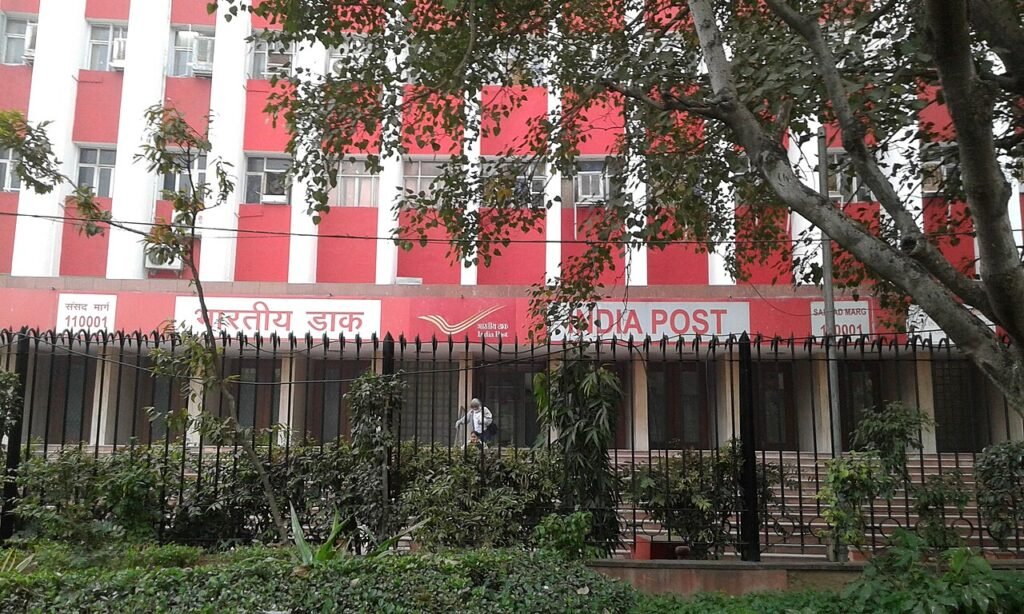
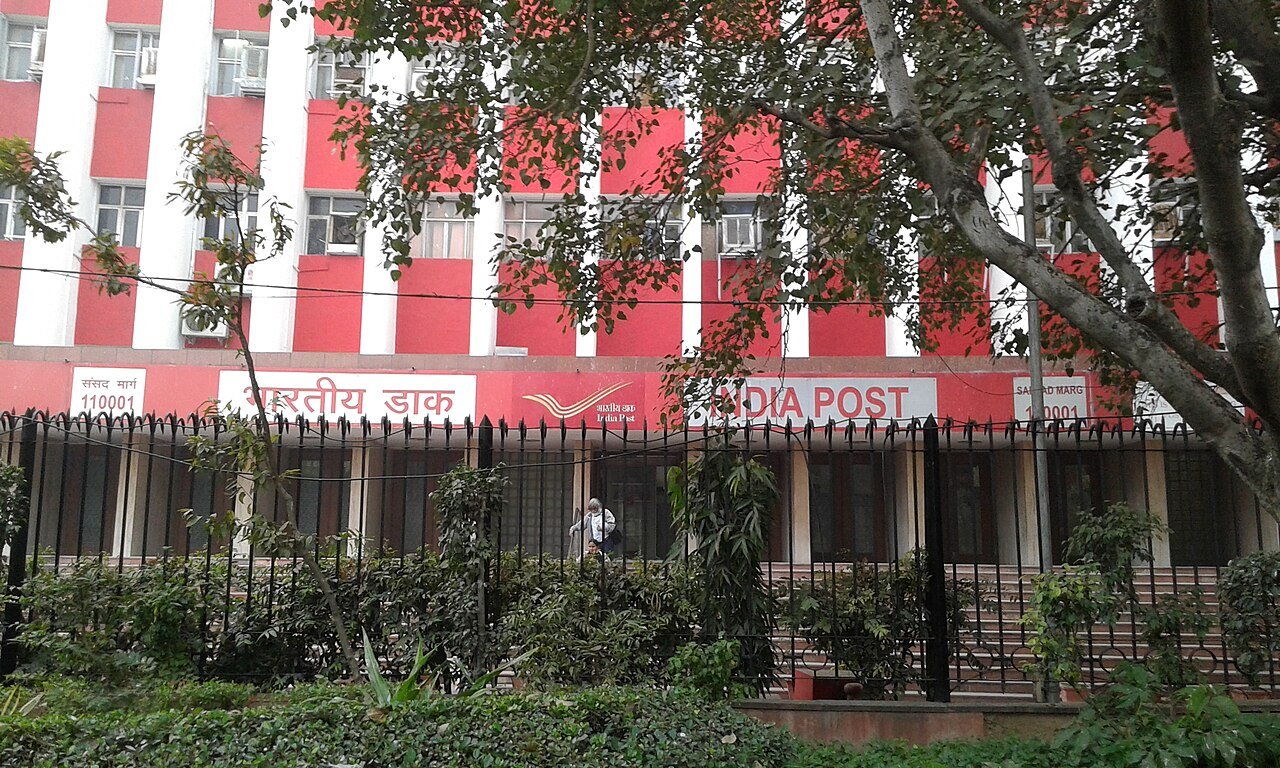
Feature photograph: “Indian Post, New Delhi” by Sidheeq, Wikimedia Commons, CC BY-SA 4.0. No government endorsement is implied.
Plan with your goal, not just the rate
This guide provides general education, not personalised investment or tax advice. Confirm your eligibility, current rates, withdrawal needs, and tax status; consult an appropriately qualified professional for individual decisions.